





Assembly, clamping, welding
Assembly and welding tables: height-adjustable ; portable or stationary
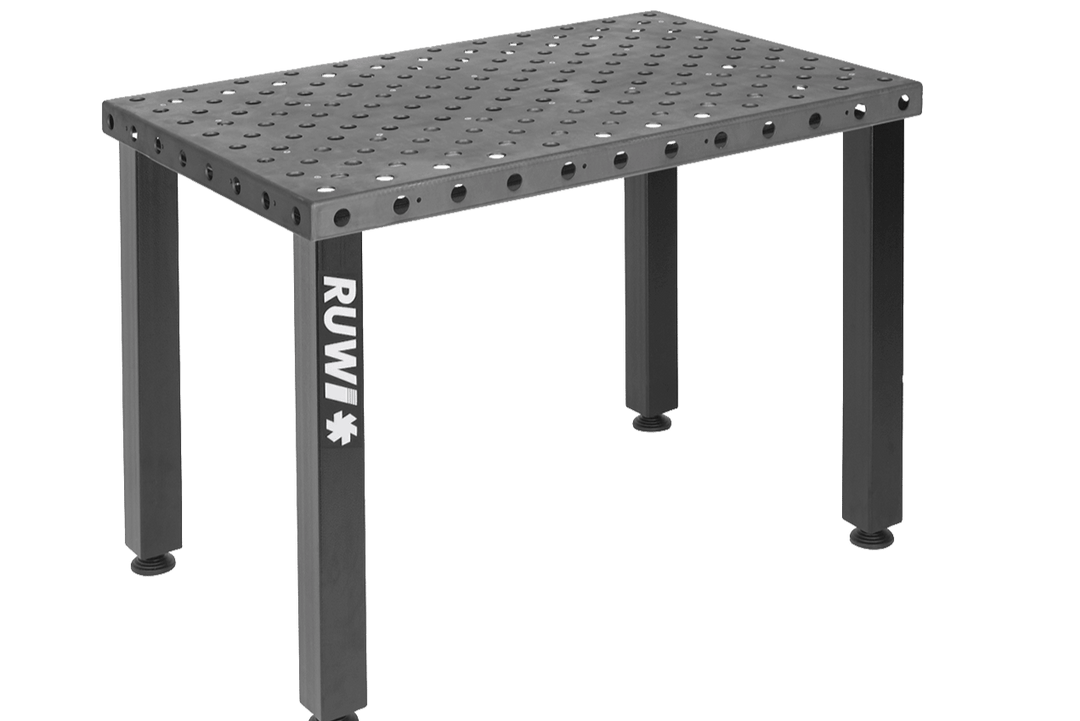
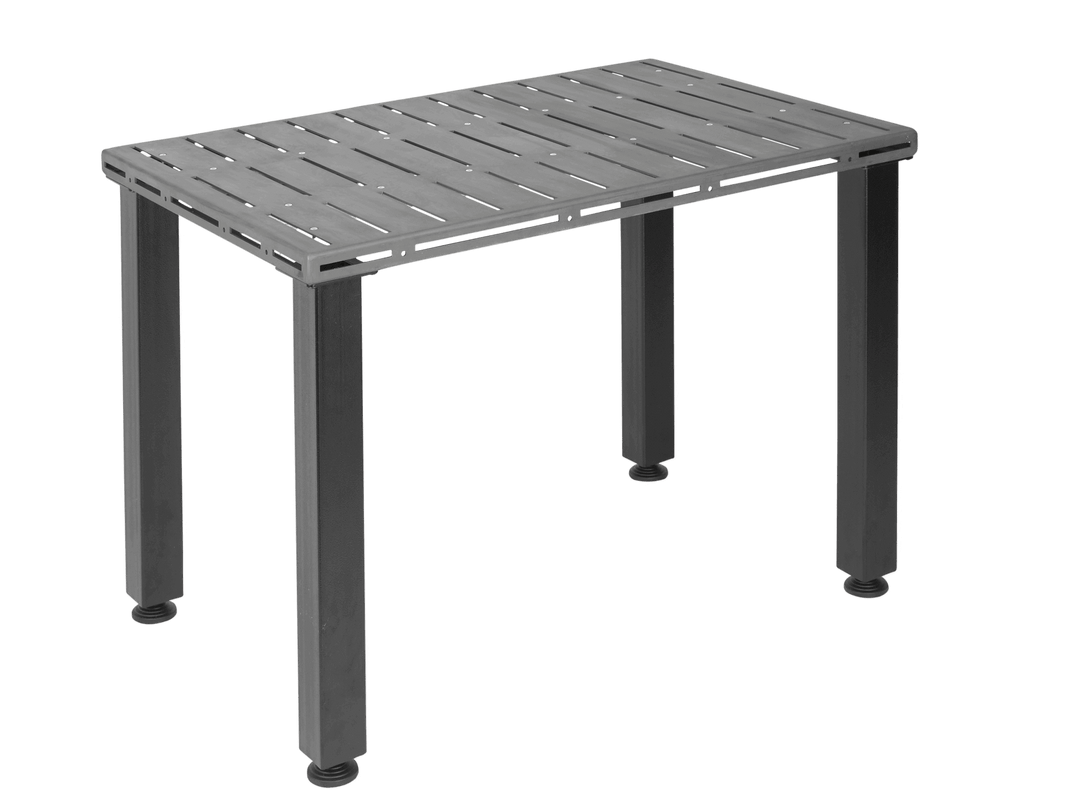
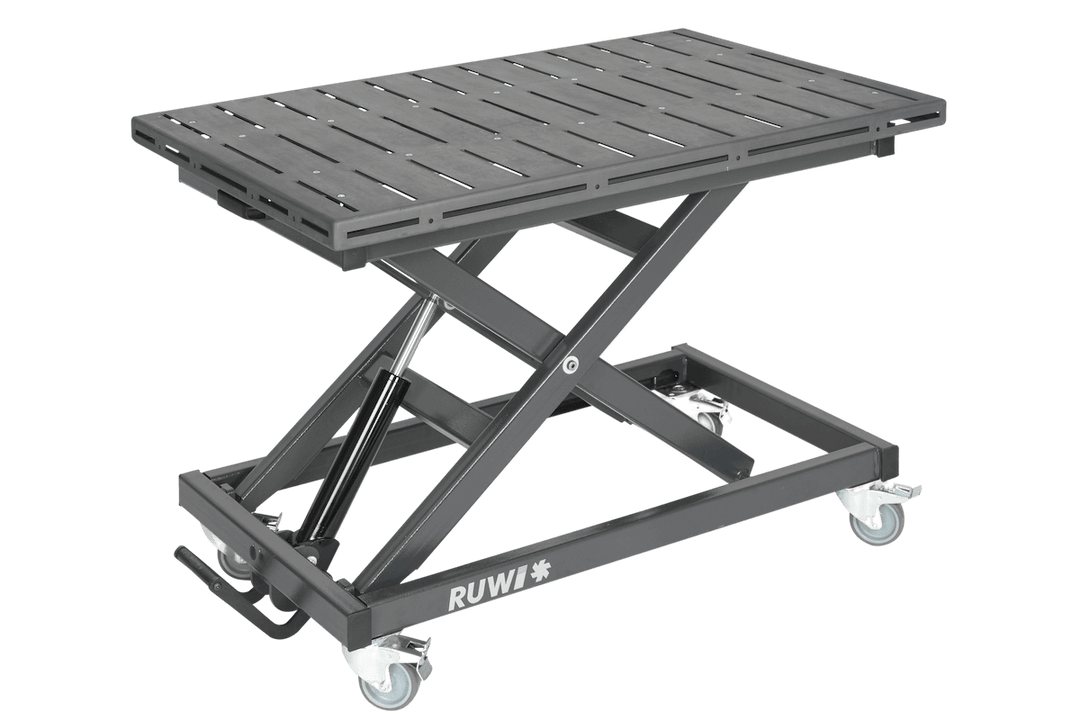
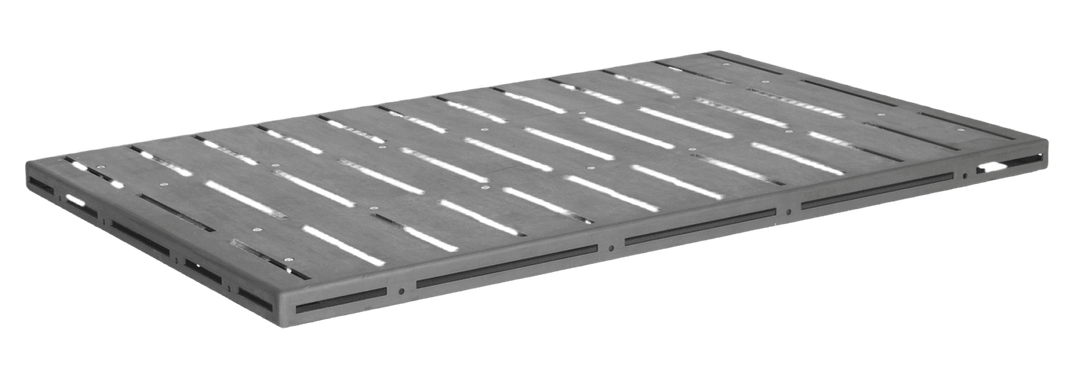
If you already have a fixed welding table, half the work is done: assembling, aligning, building jigs, tack welding, grinding, and drilling. For this, RUWI offers assembly and welding tables with a perforated plate (Ø 28 mm, 1,200 × 800 mm), made of 4 mm-thick steel, and phosphated. You can clamp at any grid position, even in the middle of the plate where there is no table edge. As a leg table, they can support up to 500 kg; as a weldinglifting table , they are height-adjustable and mobile, ranging from 46 to 106 cm. You can purchase the welding table directly from the manufacturer, the family-owned business RUWI.






Buying Guide
Which base frame for your assembly and welding table?
First, you decide on the base frame: a fixed table on swivel legs or a mobile table with height adjustment. The tabletop comes next—the perforated tabletop (Ø 28 mm) with the RUWI clamping system, or, if you prefer to slide the clamp continuously , the slot 10 mm, as a leg table or as aslot-lifting table. Both tables consist entirely of the tabletop and base frame; you choose the clamping hardware to go with them.

Assembly and welding table Leg table, perforated plate Ø 28 mm
A solid second place: Assemble the frame, align it, tack it, sand it—and weld it on the same plate.
1,200 × 800 mm work surface, 500 kg load capacity, 86 to 93 cm working height on four articulated legs. 77 kg: light enough to move it when needed.
For leg table, perforated plate, Ø 28 mm
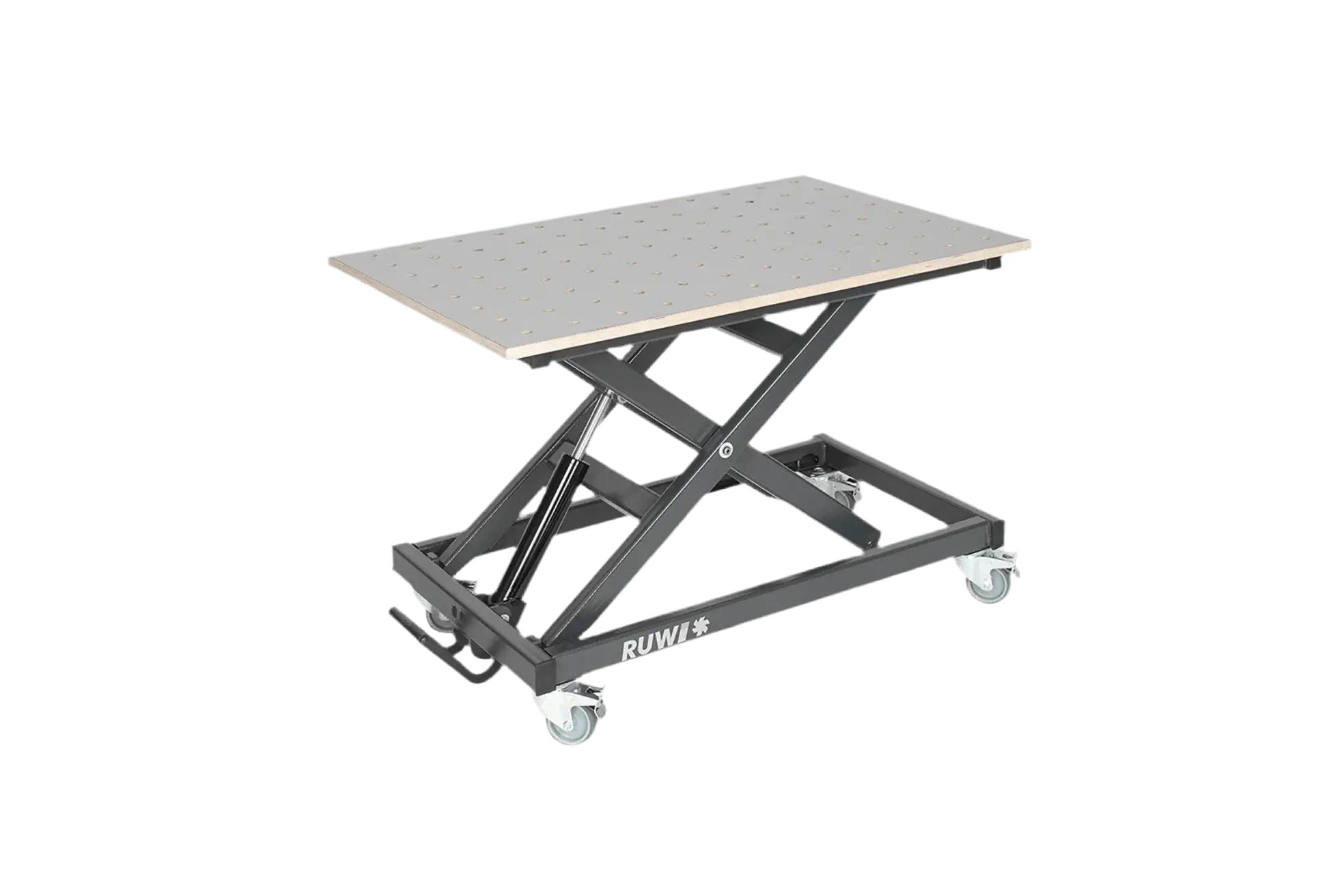
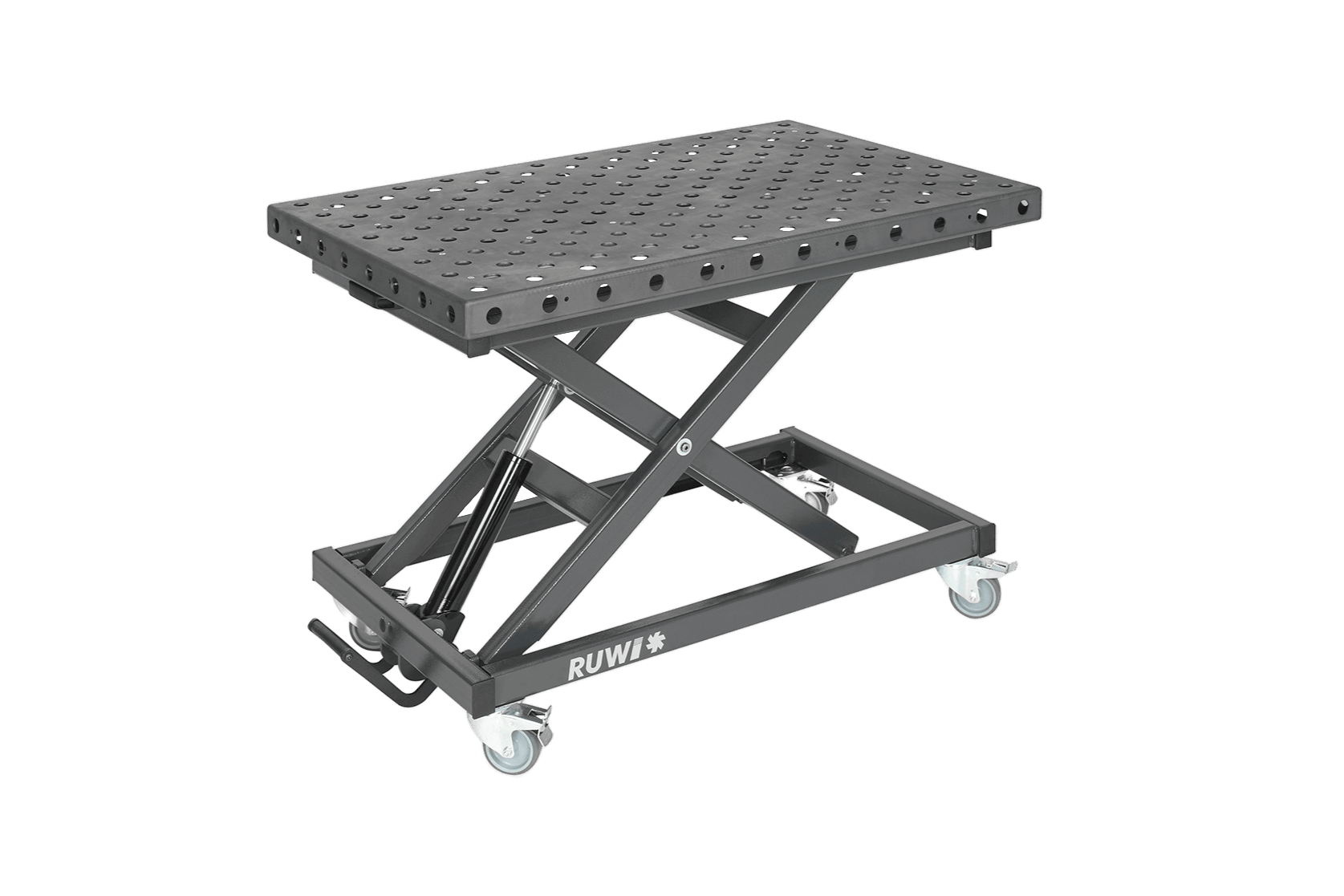
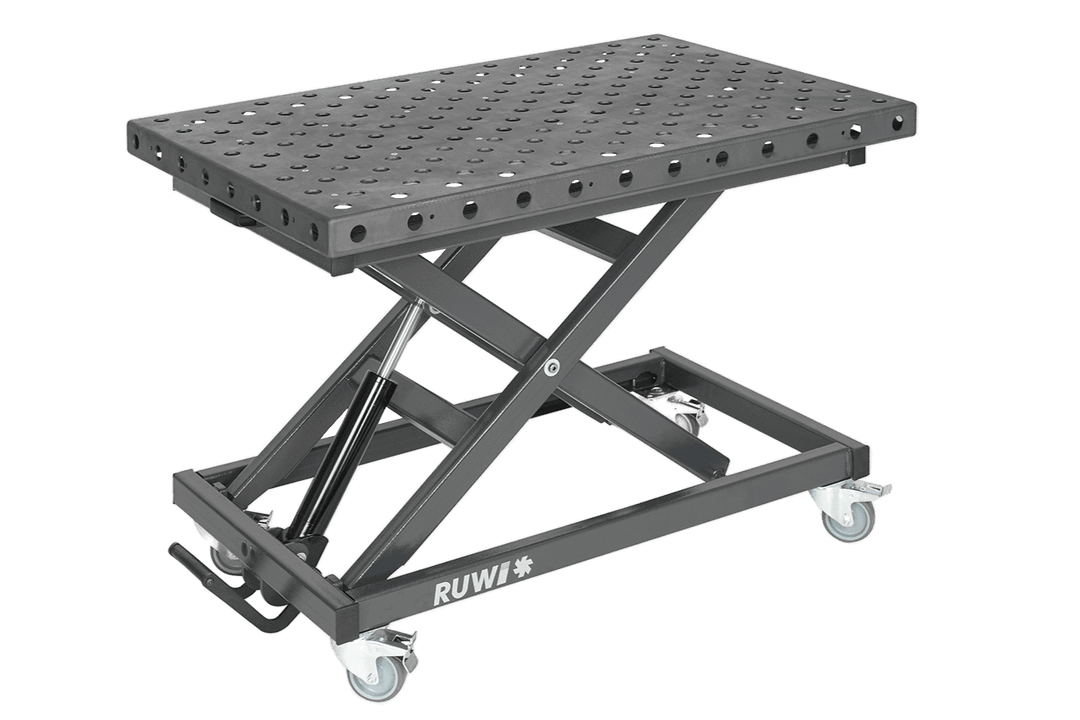
Mounting and welding table lifting table , Perforated Plate Ø 28 mm
Move the table toward the workpiece instead of moving the workpiece toward the table—and adjust the height between the assembly and the seam.
1,200 × 800 mm work surface, 46 to 106 cm continuously via hydraulic foot pump, 300 kg load capacity, four lockable solid rubbercastors.
For the " lifting table " perforated plate, Ø 28 mm
Assembly and welding table Leg Table, slot 10 mm
The tensioner glides along the joint continuously —no need to move from hole to hole.
1,200 × 800 mm work surface, solid slot 10 mm, 500 kg load capacity, 86 to 93 cm working height, 76 kg net weight.
For the slot 10 mm leg tableClamping Technology
Perforated plate, Ø 28 mm, at welding table: clamping at each hole
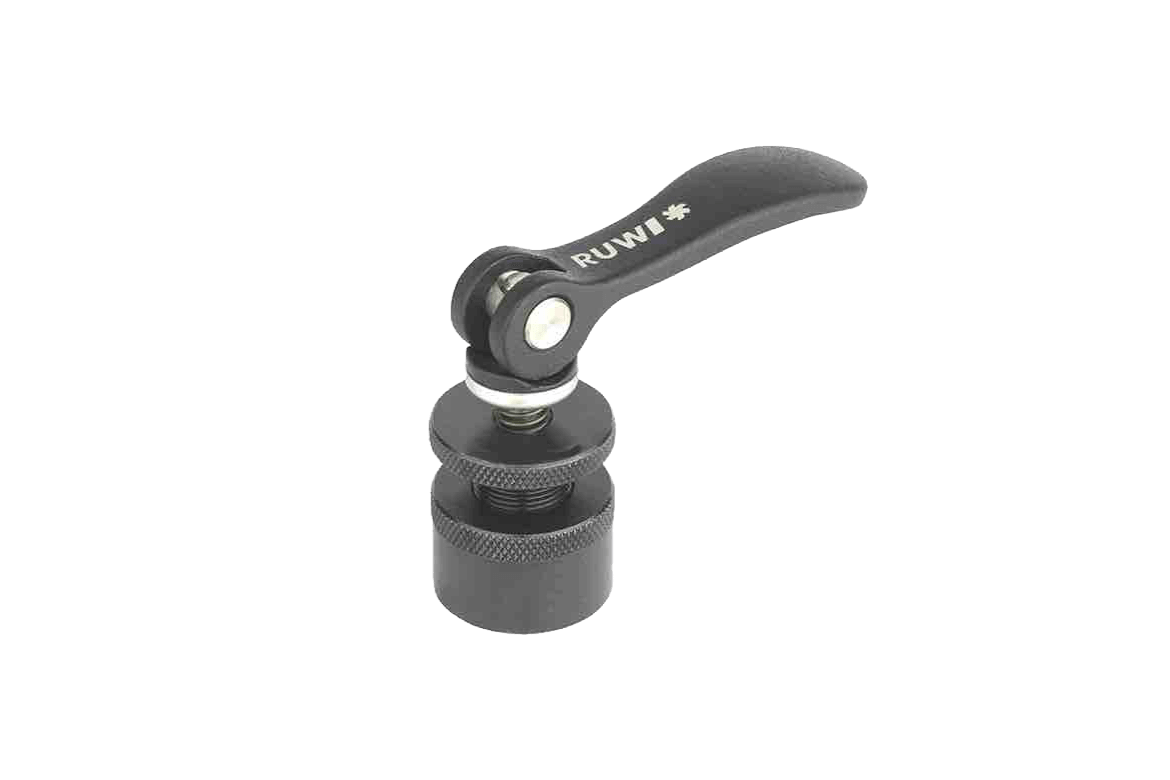
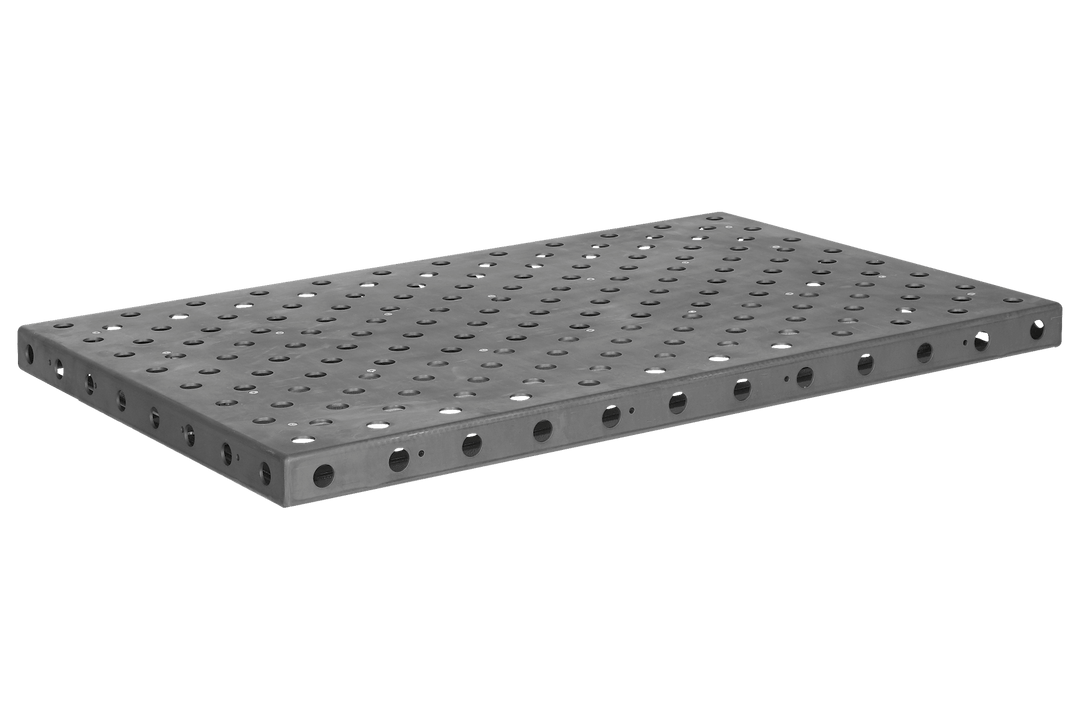
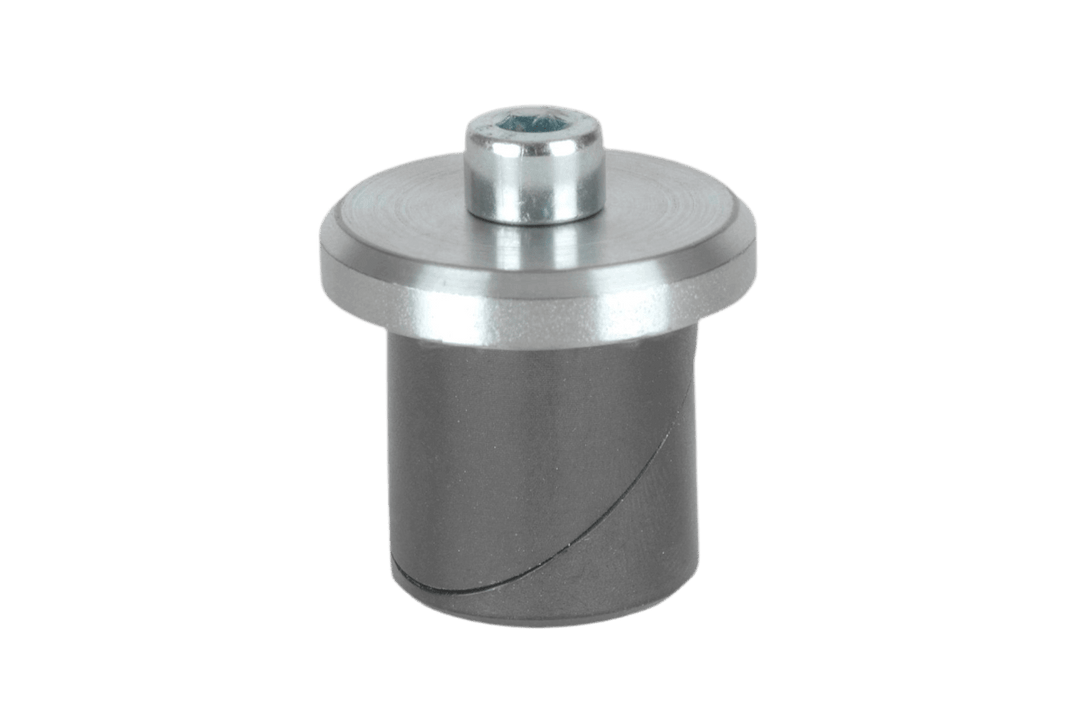
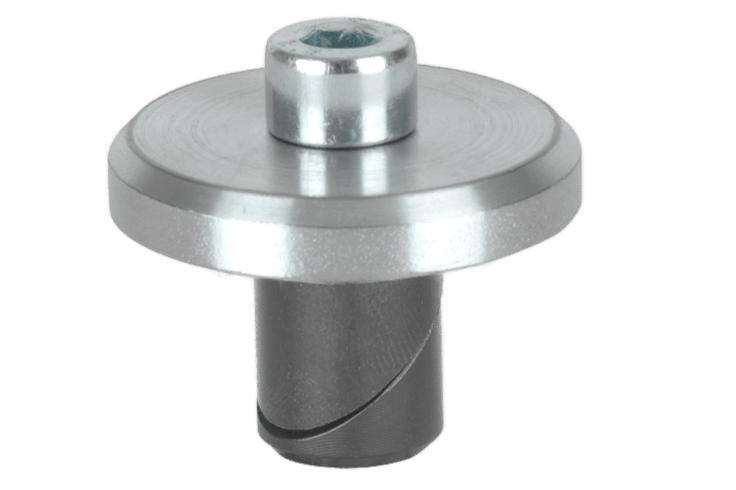
On a smooth tabletop, clamp it in place wherever there is an edge. In the “ hole grid ” (Ø 28 mm), you can secure it at any grid position: The holes are spaced 100 mm apart, center to center. Each hole accommodates a “ clamping bolt ,” and this bolt serves as the connection point for every additional component. When tightening the “ socket screw ,” the burnished steel bolt locks into the hole; this clamping mechanism protects the hole’s wall instead of cutting into it.
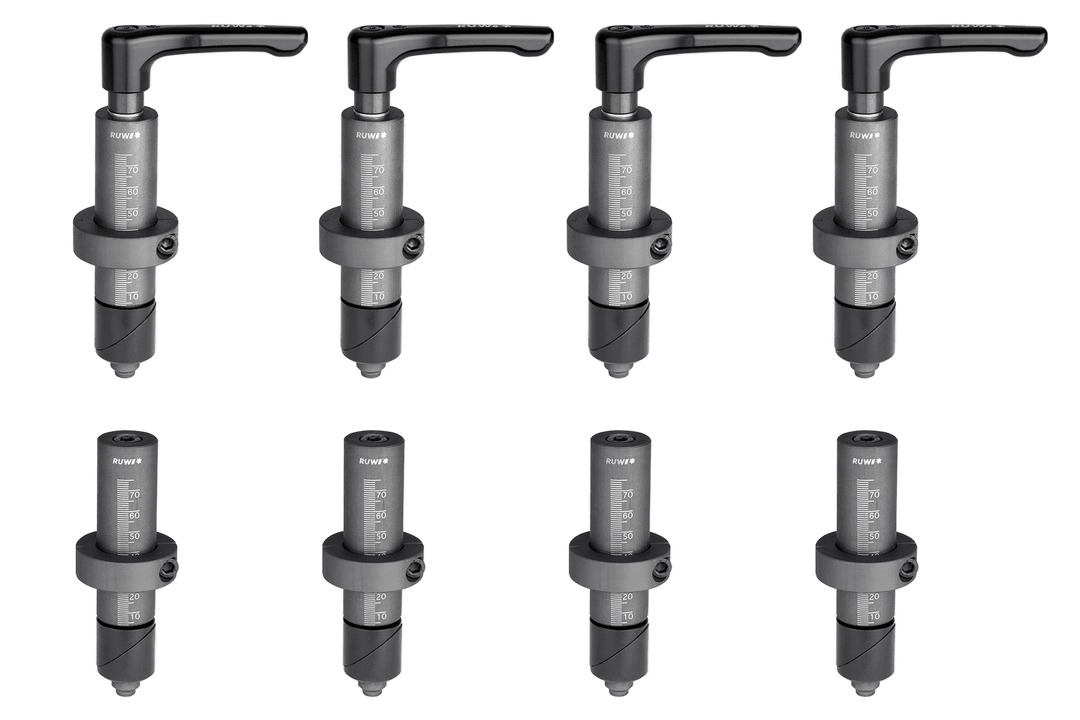
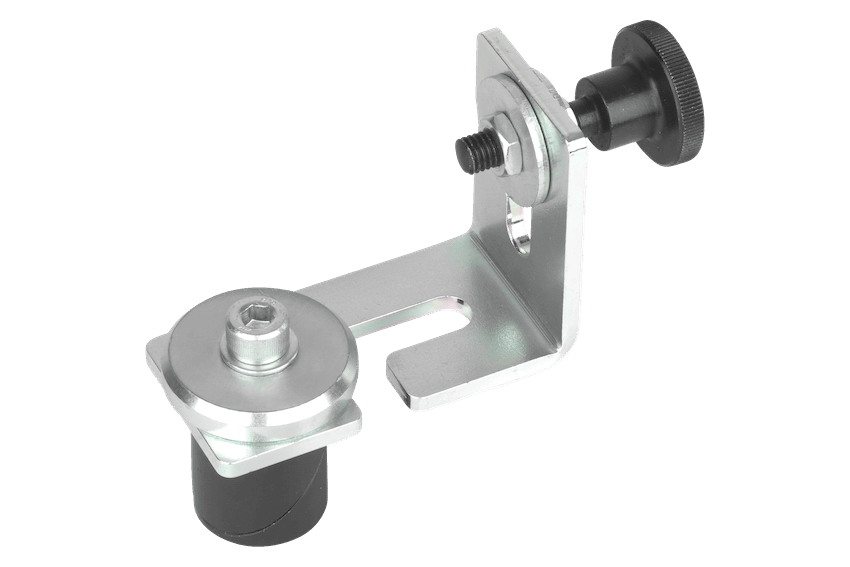
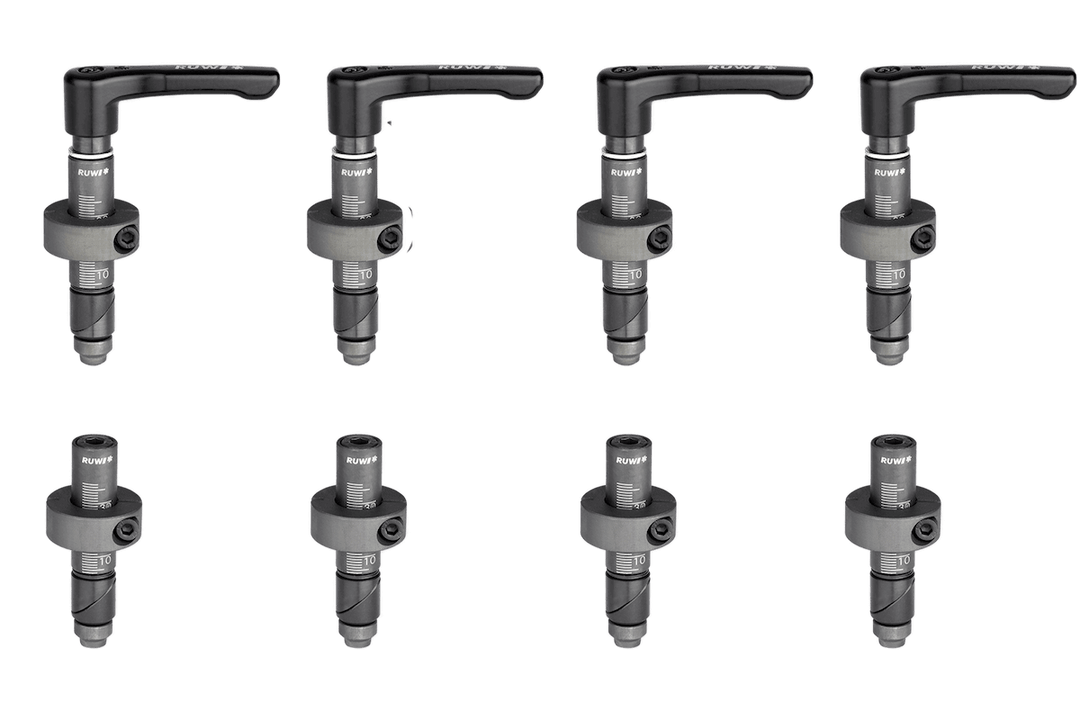
This pays off right away during assembly and fixture construction. The fixture for the recurring subassembly consists of three parts: a “ positioning angle ” holds it in place, a clamp applies pressure from the side, and a height-adjustable bolt secures it from above. The same bolt in the same hole results in the same position—you align it once and then simply clamp it in place. The height-adjustable bolts feature a laser-etched scale, clamping range scale ranging from 0 to 75 mm: read the height instead of trial and error.
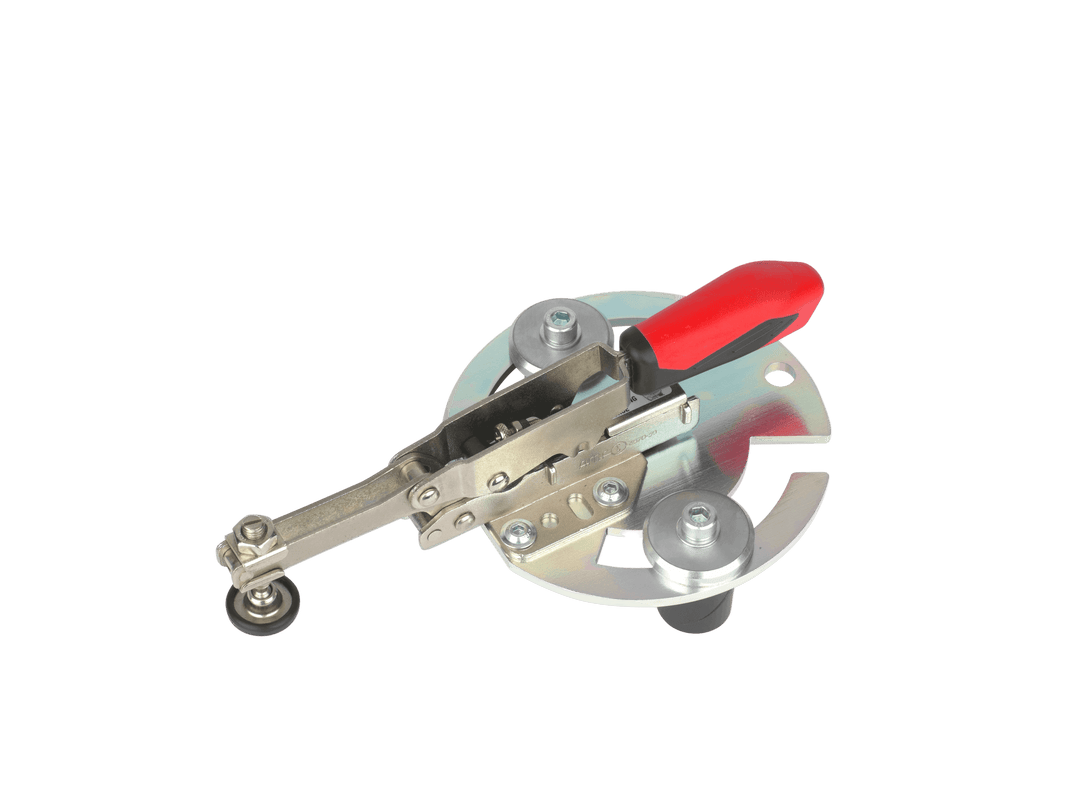
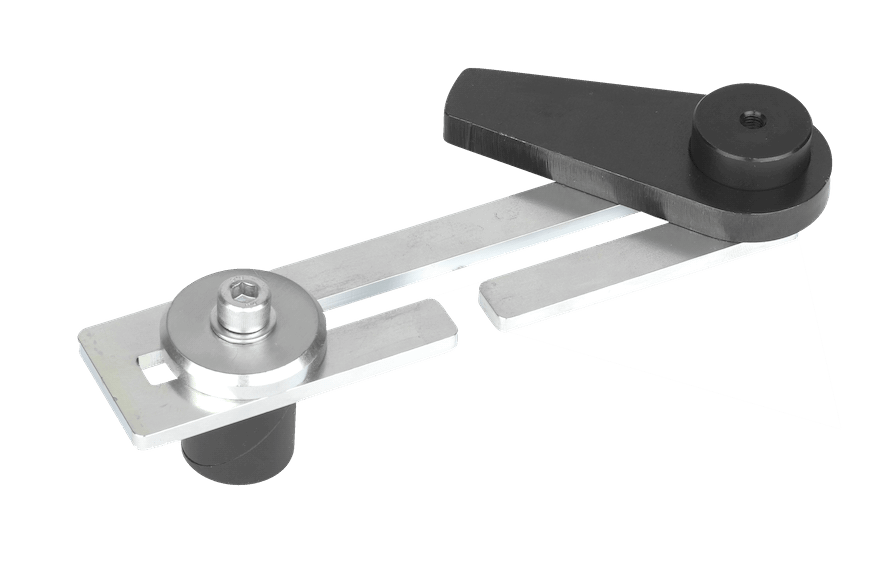
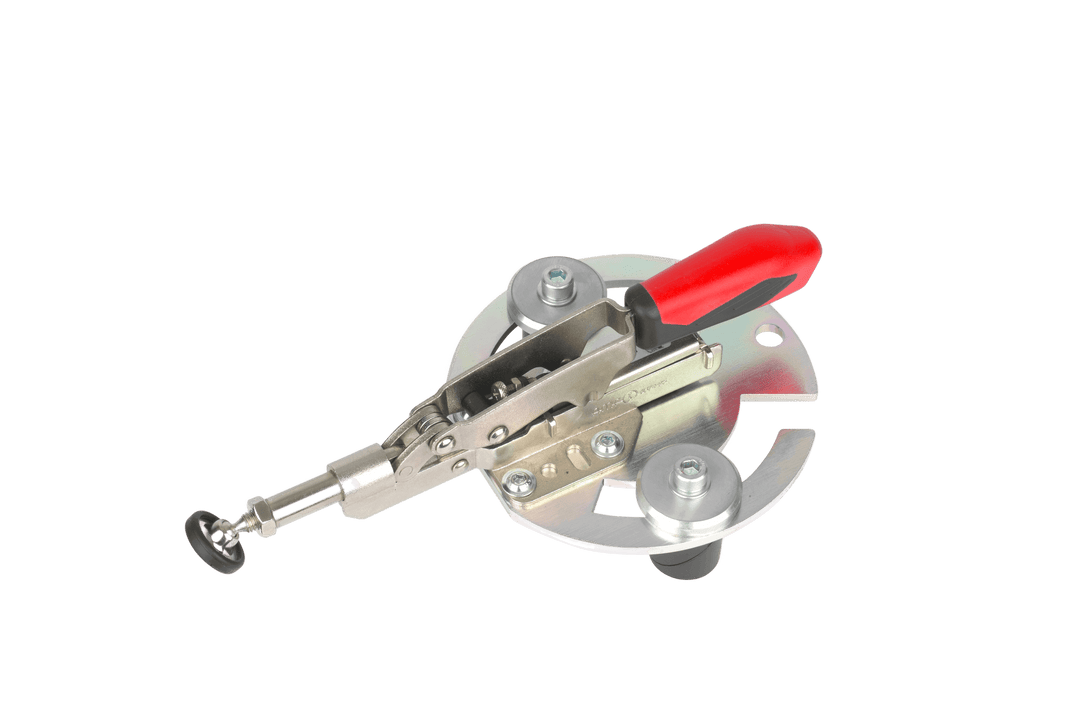
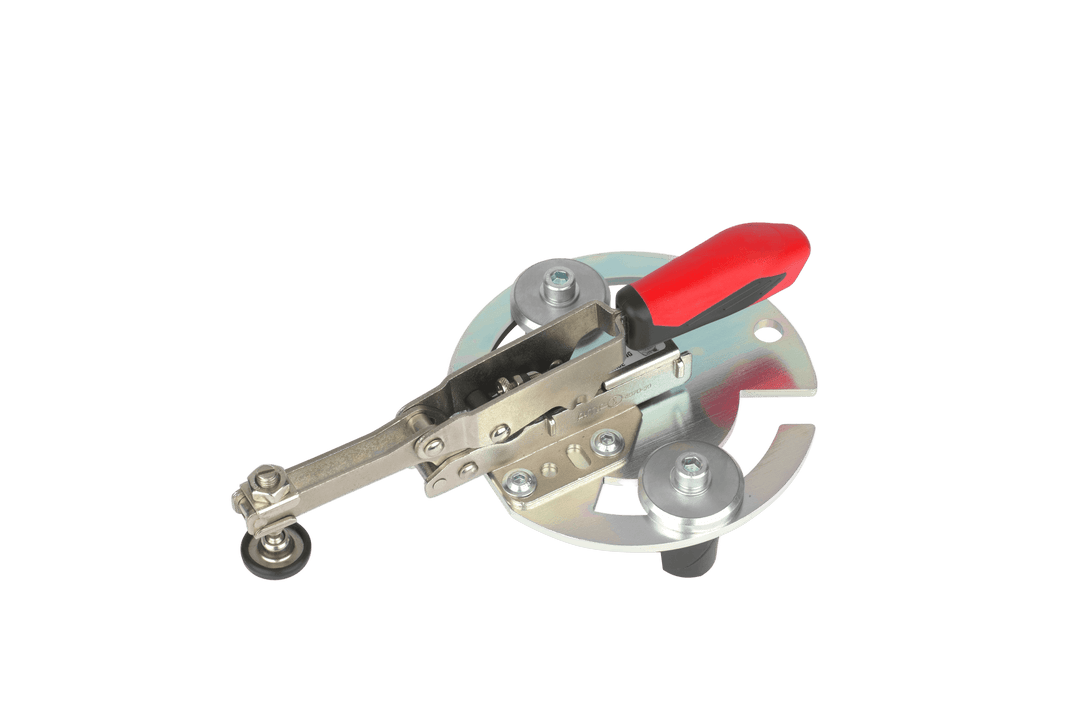
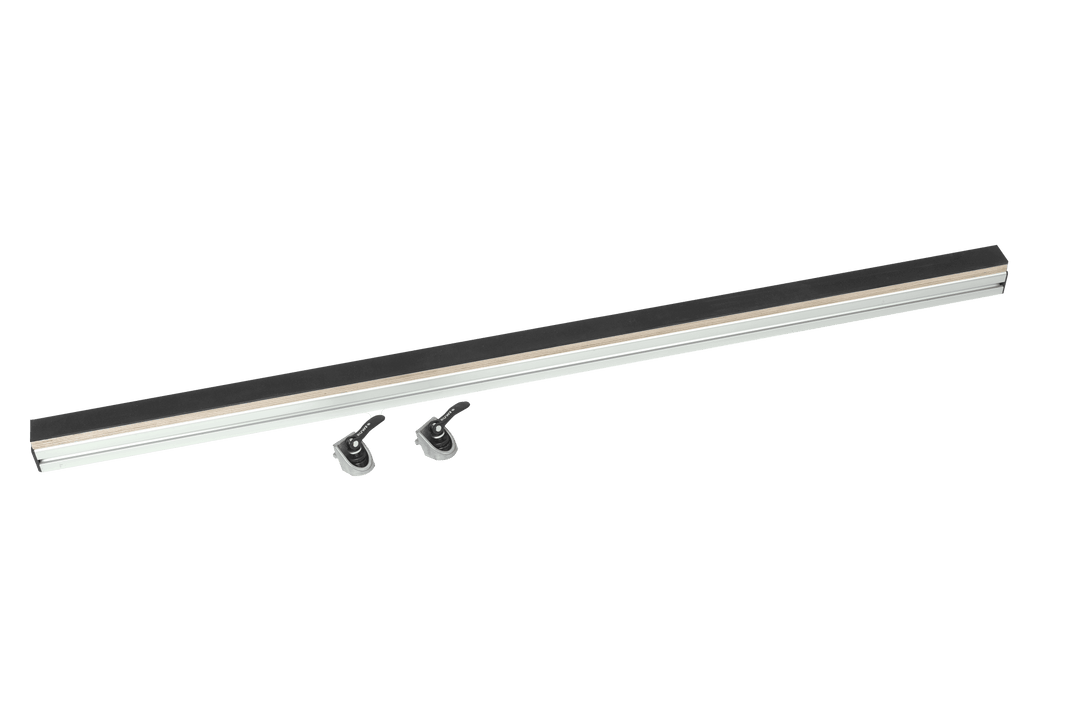
You don't just clamp for welding. The positioning angle (80 × 60 × 40 mm) provides the reference edge against which the workpiece rests before a clamp engages. The clamping angle also engages with slot-8 aluminum profiles (Item System 40 and compatible). This allows you to mount profile stops directly onto the plate. When grinding and drilling, the same clamp used for tack welding is used: a 100 mm overhang extends beyond the profile and sheet metal. The adapter block raises the clamping point on the round adapter plate in 12-mm increments; its mounting holes also accommodate quick-release clamps from AMF, Bessey, and Kipp.
When the welding machine is brought in, the sheet metal is already securely clamped: Both hands remain on the welding torch and the filler material rather than on the workpiece. The “ clamping force ” holds the component in place while the heat is applied—the weld bead runs through without the part shifting. What the clamping system cannot do: prevent warping.
clamping bolt s are made of blued steel—an in-house development by RUWI —and, like the entire RUWI Steel Line, are manufactured in Germany.
The clamping system doesn’t stop at your own table. The same clamps are available with clamping bolt Ø 16 mm for existing welding tables and clamping plates with hole grid Ø 16 mm—so you can upgrade your table instead of replacing it—the height-adjustable bolt clamps from 0 to 36 mm there instead of 0 to 75 mm. There is one limitation to the grid: it clamps at the drill holes. If the pressure point needs to be positioned exactly on the joint, you can readjust it—using the slotted holes on the round adapter plate or, for the eccentric clamp , via the pivot bearing.

Work surface
Work surface: 1,200 × 800 mm – and how to expand it
Each plate of the RUWI Assembly and welding tables measures 1,200 × 800 mm. A railing section with the standard post spacing of 1,200 mm thus fits lengthwise on the table in one piece—you don’t have to rotate it or reposition it. With the right accessories for the welding table , the same table serves as both an assembly and clamping table: You set up the assembly on it and align it before making the first weld. How much of that involves welding depends on your job.
Why 4 mm is enough: The plate is folded, welded at the corners, and—in the case of the leg table—reinforced with a stiffening cage—which keeps it flat, even under 500 kg. Your existing screw clamps grip the folded edge. phosphated The surface can withstand welding heat and spatter and is rust-protected. A metalworker can weld a frame together himself—but not the pre-drilled grid or the phosphated surface. The plate, however, is not designed to be straightened with a hammer.
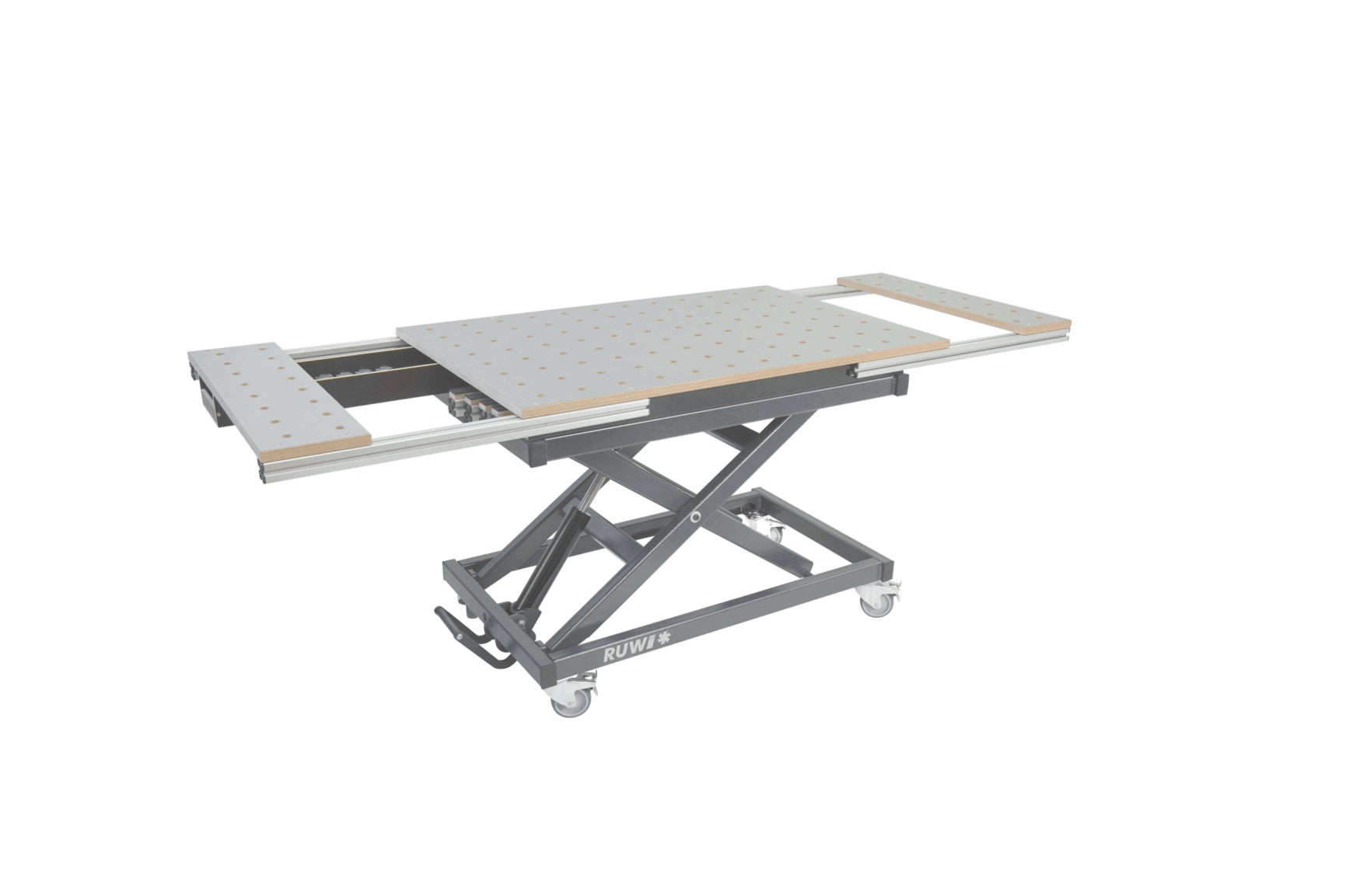
If the workpiece is longer, place several trestle tables side by side and screw them together through the holes. Use the adjustable feet to level them, even if the shop floor has a slope. The support beam then spans both panels instead of ending at the edge of the table. The grid does not extend across the joint: each panel is clamped within its own grid.
The second method involves raising the height. If a support beam extends beyond your existing welding table , you slide the lifting table underneath it, lock the castors in place, and raise it to the correct height—ensuring the workpiece rests on it the entire time. RUWI specifically designed the lifting table to complement large, stationary welding tables—not just as a standalone workstation.

base frame
height-adjustable and portable: the welding—lifting table
The base frame functions as a scissor lift table and is operated by a hydraulic foot pump continuously , with a travel range of 46 to 106 cm. You can weld the root pass while seated and the cap pass while standing. The assembly you’re building is thus at your height, not at the table’s height. Both RUWI lifting tables stand on the same base frame, equipped with the same foot pump manufactured in Germany. It lowers evenly and consistently regardless of the load—whether the tabletop is empty or carrying 300 kg. The hydraulic system is repairable and spare parts remain available—if the pump is defective, you replace the pump, not the table.
As a mobile welding table , it rolls on four lockable solid-rubber wheelscastors to wherever you’re assembling—next to the assembly, beside the fixed table; it can carry up to 300 kg. It stands firmly as soon as the locks engage—lock them in place before you clamp anything down. That same 300 kg is the limit—200 kg less than with the leg table. Heavier assemblies belong on the leg table.
If you already have a RUWI lifting table from the woodshop, you don't need a second one base frame for metalworking—the Ø 28 mm perforated plate is available separately and fits directly onto the RUWI lifting table -base frame.

Clamping devices for the hole grid
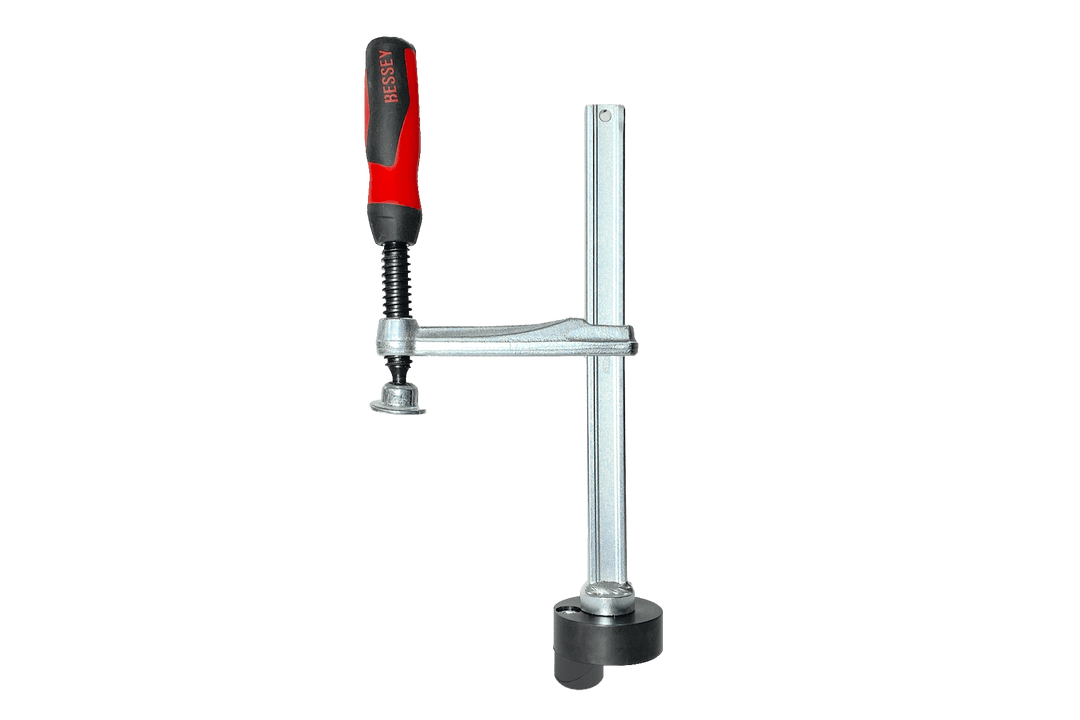
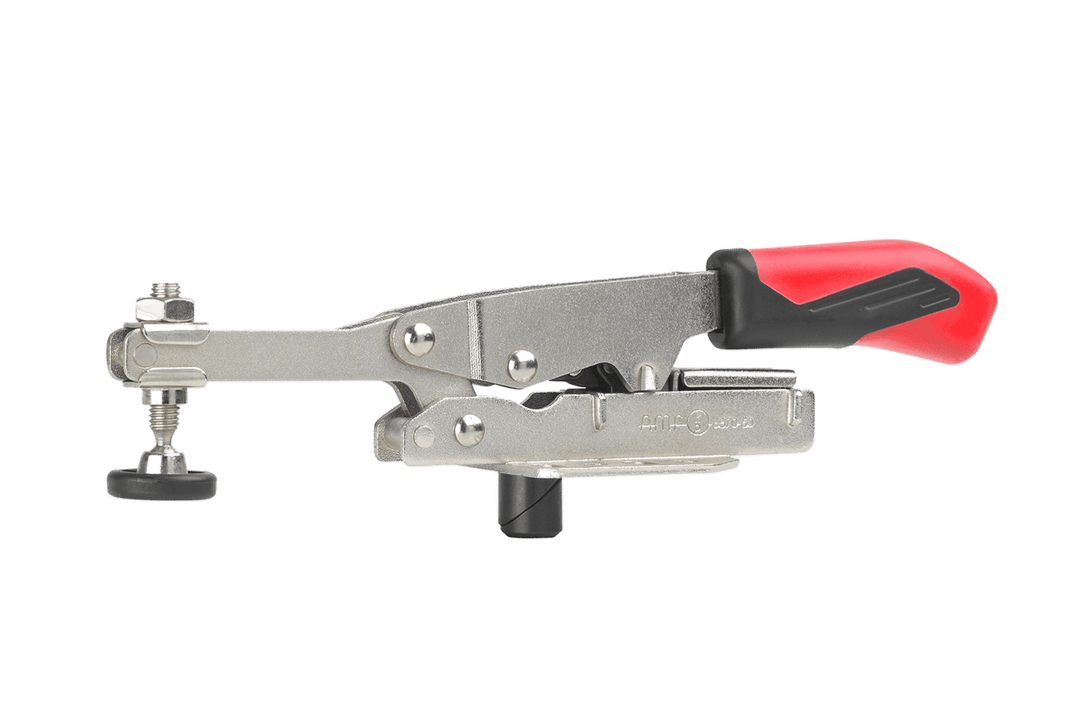
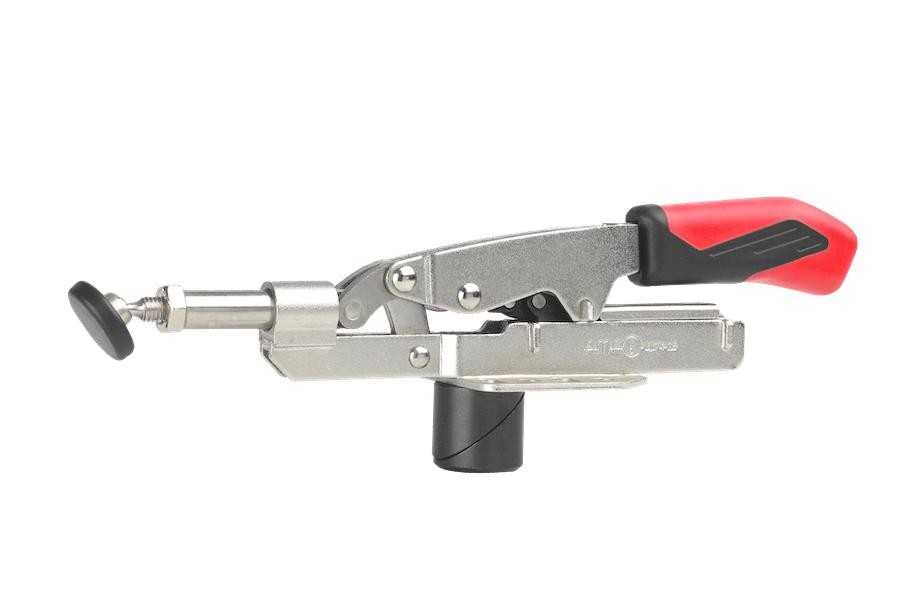
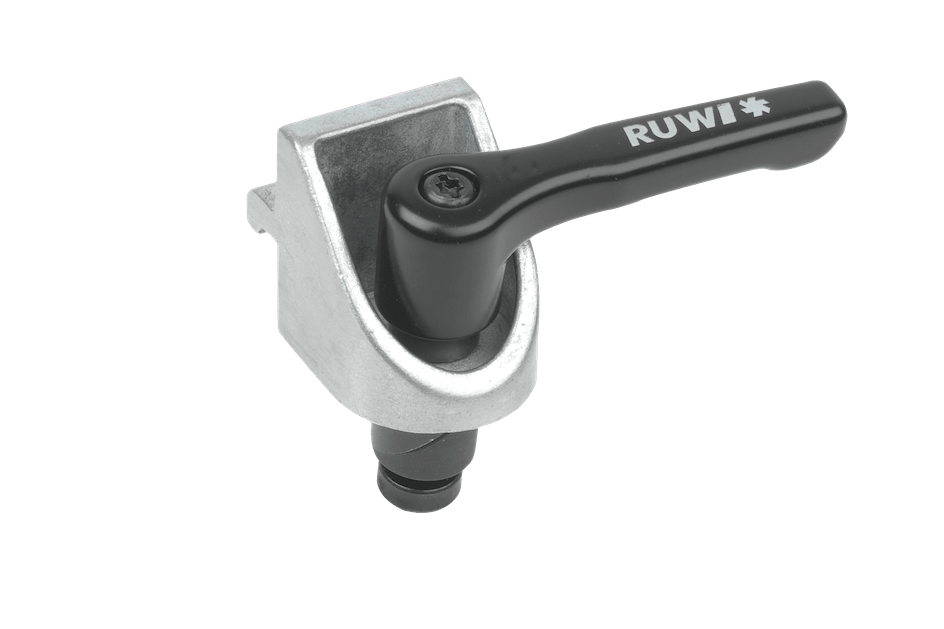
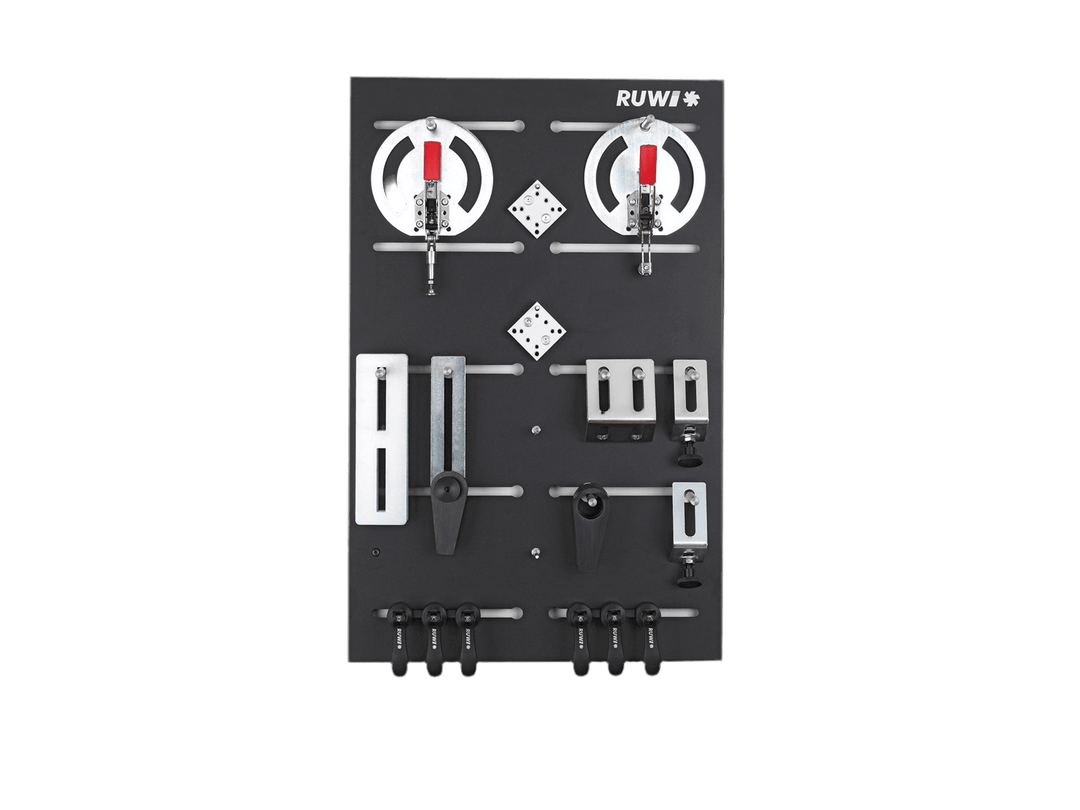
For quick attachment, use the eccentric clampclamping bolt. vertical toggle clamp Press from above, horizontal toggle clamp or against a stop from the side—for the “ RUWI ” table, use “ clamping bolt ” with a Ø 28 mm diameter; for 16-mm-hole tables, use Ø 16 mm. If you need more contact surface, use the “vertical toggle clamp ” with a round “ adapter plate ” and “ clamping bolt ” with a Ø 28 mm diameter; with “ adapter plate ” for the 16-mm grid, there’s also the horizontal toggle clamp. For spot clamping, use the TW 16 screw clamp with an adapter disc and clamping bolt.
clamping force supplies the Vario clamping bolts (Ø 28 ) in sets; the Clamping Tool Set 1 and the more comprehensive Set 2 are available as ready-to-use kits.
Frequently Asked Questions
Is this a " welding table " or a workbench?
Both—and in the order indicated by the name: first assembly, then welding. If you have a fixed welding table, the long seam stays there. The RUWI table handles everything that comes before and in between: assembly, alignment, and building jigs. You can still weld on it—the 4-mm-thick, phosphated steel plate withstands welding heat and spatter, and the perforated plate (Ø 28 mm) provides clamping during both assembly and tack welding. If you don’t have a table yet, the RUWI table can be your first.
Will the RUWI clamping system fit my existing welding table?
It’s the clamp that determines this, not just the grid. With a clamping bolt – eccentric clamp, vertical and horizontal toggle clamp, positioning angle, clamping brackets, and the TW 16 clamp—a Bessey model with a RUWI adapter disc—the setup fits into hole grid with the appropriate diameter. You choose between Ø 16 mm or Ø 28 mm when ordering; the plate must be at least 4 mm thick. If you later upgrade to a table with hole grid Ø 28 mm, you’ll need the 28 mm version of the clamps: the bolt alone cannot be replaced. For very thick clamping plates, check the clamping length beforehand. The clamps with round adapter plate Ø 140 mm, on the other hand, sit on two clamping bolt —here, two holes in your table must align; if in doubt, ask beforehand. For aluminum profile tables and slot 8 to 10 mm, there is the clamping system set for slot. For wooden tables with hole grid Ø 20 mm— RUWI lifting table , Festool MFT—the TW 16 clamp with clamping bolt Ø 20 mm is suitable.
welding table Buy: Leg rest or " lifting table"?
If your workstation stays in one place, go with the leg table—it can support 500 kg for the frame, beams, and machine parts, and it costs less. If the table needs to be moved around and its height adjusted, go with the lifting table. If your typical assembly weighs more than 300 kg, the choice is clear. The tabletop—and thus the clamping system—is the same for both.
Available at
Consultation and demonstrations are also available at our dealer partners.