
Practical quick release especially for aluminum profiles


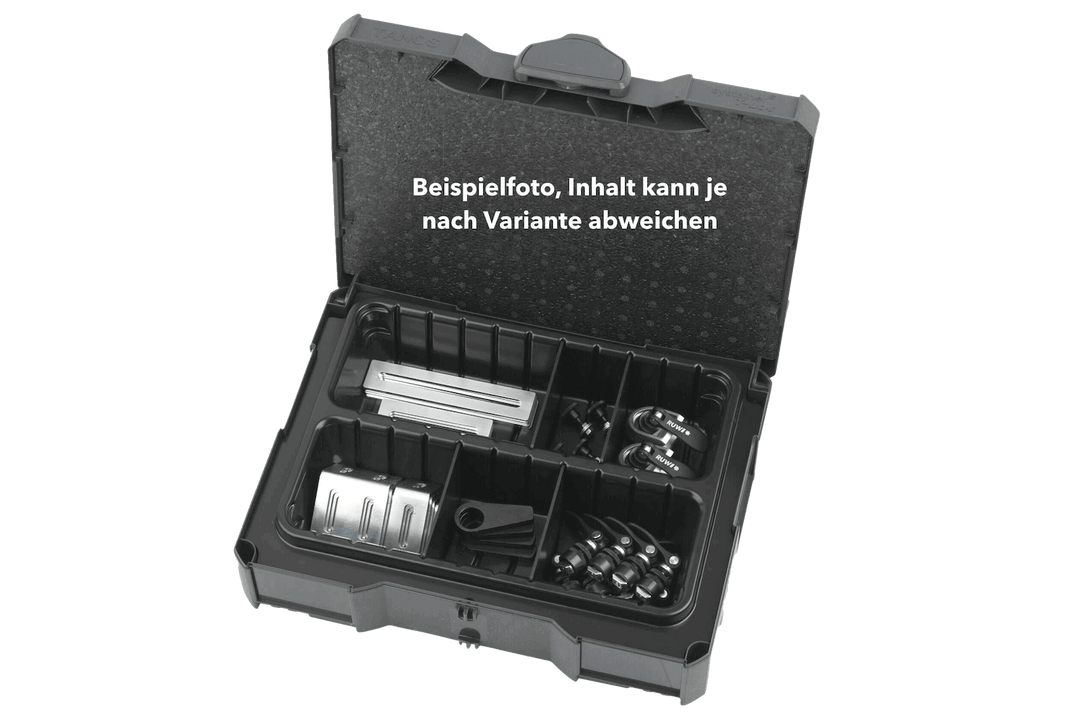
Quick-release clamps for trade, mechanical engineering and industry
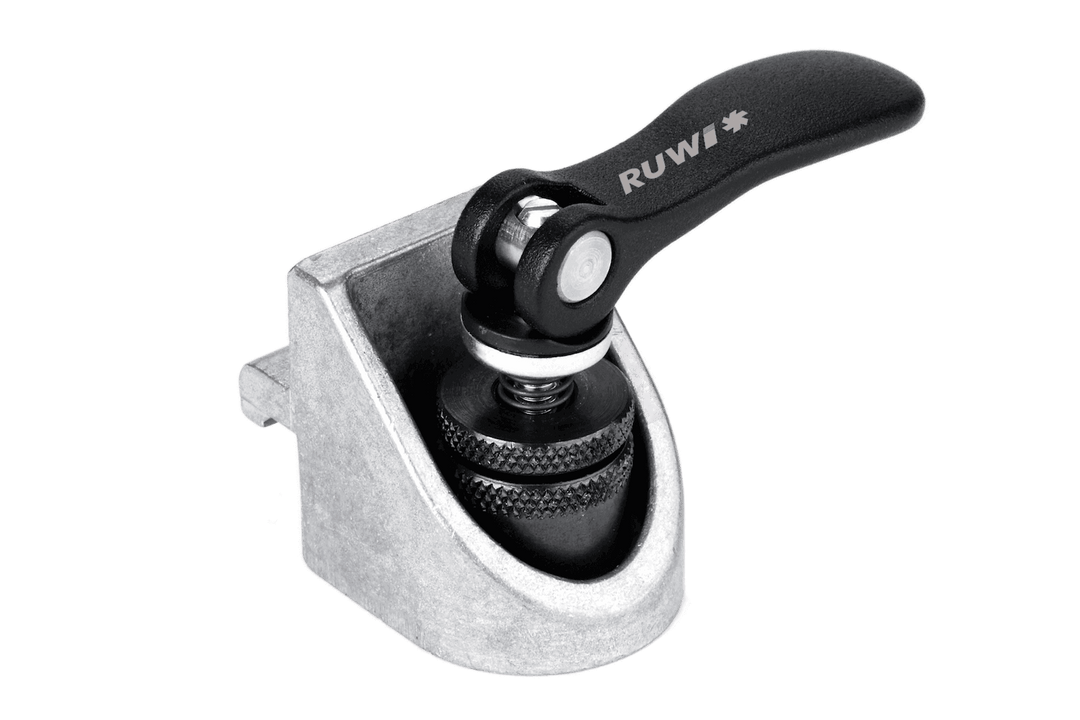
Faster clamping, no wrench required: RUWI quick-release clamps use the eccentric lever principle to secure workpieces, brackets, or stops in T-slot profiles (slots 6, 8, 10) without tools. Where others turn wing screws, you simply flip the lever—converting approximately 100 N of hand force into 2.5 to 4 kN of clamping force. This saves a noticeable amount of time when frequently changing workpieces and stops, both in the workshop and in fixture and machine construction.
Which quick-release clamp is right for your slot?
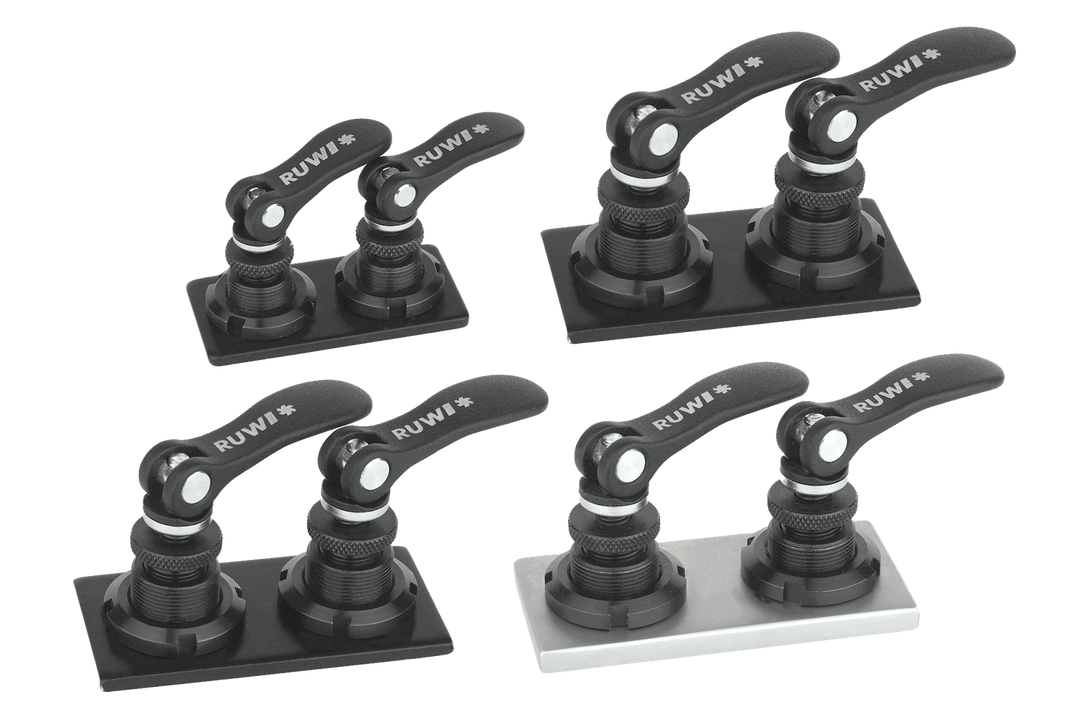
The choice depends on the groove width of your profile and the thickness of the workpiece. Three sizes cover the standard range:
- Ø 15 mm for slot 6: compact (height ~34 mm), clamping stroke ~6 mm, clamping force ~1.5 kN – for small systems such as 30×30 profiles and light-duty applications. Also available with external thread and clamping nut.
- Ø 20 mm, the all-rounder (height ~44–47 mm, clamping stroke 8–11 mm, ~2.5 kN) for 40×40 and 45×45 systems: for slot 8 or slot 10, also available with an external thread for slot 10.
- 30 mm diameter for higher clamping forces (up to 4 kN) and greater clamping height (14–26 mm), for thicker workpieces and frames: for slot 8 or slot 10.
Technical Design and Functionality
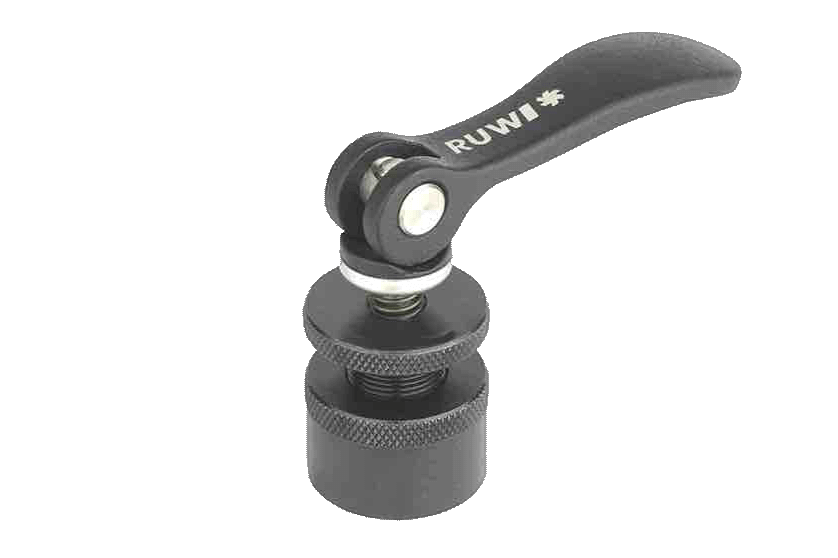
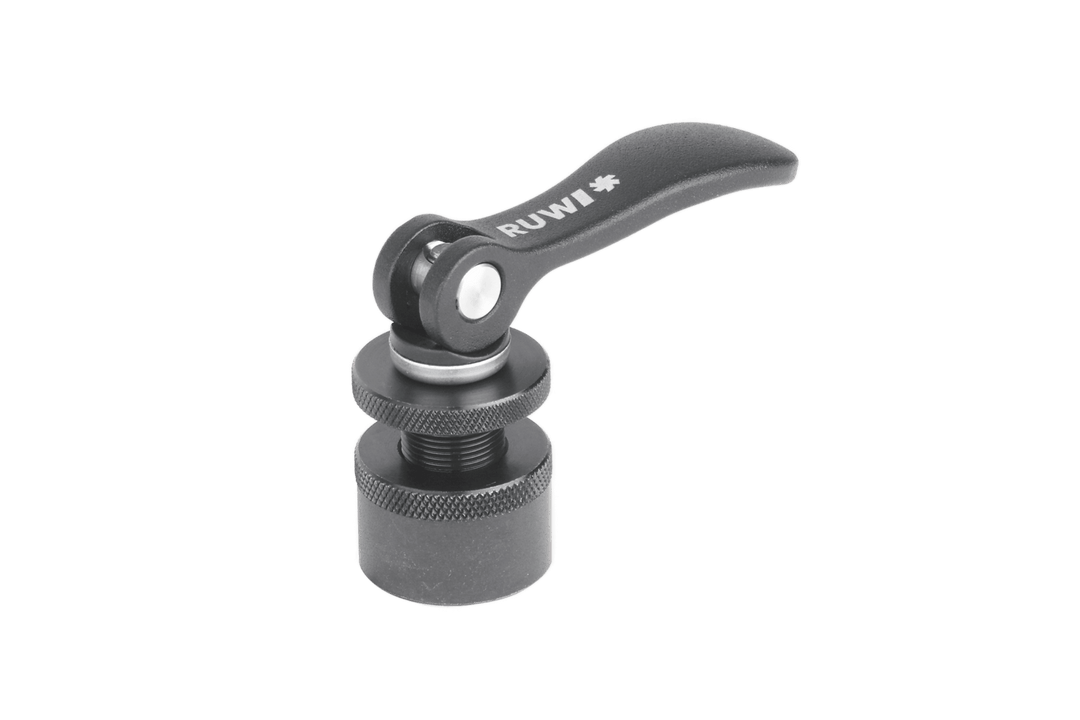
RUWI quick-release clamps are eccentric clamping levers that lock into the profile groove via a form-fit mechanism. At their core is a cylindrical base body (approx. Ø 20 mm) and a spring-loaded bolt. When the lever is flipped, it pulls the T-slot nut upward—a short lever stroke multiplies the manual force by a factor of 20 to 25.
- Eccentric lever: clamps the slotted nut into the groove with minimal effort.
- Adjusting nut: precisely adjusts the clamping stroke to the workpiece height and material thickness.
- Return spring: allows the tensioner to spring back to the open position on its own when released.
- Materials: Steel, galvanized slotted nuts, levers made of aluminum or die-cast zinc – designed for continuous use, “Made in Germany”.
This generates a clamping force of 2.5 to 4 kN from a manual force of approximately 100 N—enough to securely hold fixtures and workpieces during drilling, milling, or assembly. The lever locks into place with a distinct click and a positive engagement, which reduces the risk of accidental release, even in the presence of vibrations.
Ergonomics and Cost-Effectiveness
It only takes one hand to operate: simply flip the lever while holding the workpiece with your other hand. No wrench, no searching for tools, and you can tell by the resistance of the lever whether the clamp is secure. Each clamping operation takes only seconds—this reduces setup time and causes less fatigue during frequent setup changes.
These clamps are more expensive than simple T-slot nuts with wing screws. However, when working with frequently changing workpieces, in mass production, and in fixture construction, the time saved on setup quickly offsets the higher cost—and thanks to their robust construction and the availability of replacement parts, these clamps remain in service for a long time.
Areas of application
- Woodworking and Workshop: Securing workpieces on drill and router tables with grooves, flexible stops, and gluing frames.
- Metalworking and Mechanical Engineering: Fixture manufacturing, sensor mounts, stop blocks in profile racks, quick changeovers.
- Furniture manufacturing and interior finishing: temporary cabinet structures, molding, and assembly jigs.
- Exhibition stand construction and prototyping: quick assembly and disassembly of aluminum profile structures, freely positionable brackets.
- CNC and Automation: Hold-down devices on CNC tables, flexible clamping points in systems.
Advantages over wing screws and slotted nuts
- Quick setup times: Loosening and repositioning in seconds instead of tightening screws over several turns.
- Tool-free operation—no Allen wrenches or open-end wrenches required.
- Suitable for various profile manufacturers and groove widths.
- Clamping force up to 4 kN thanks to a form-fit eccentric mechanism.
- Greater workplace safety, because the quick clamping feature is actually used.
Buying Guide
Four questions will help you choose the right model: What is the slot width of your profile (slot 6, 8, or 10 → Ø 15, Ø 20, or Ø 30)? How thick are your workpieces (taller parts require a longer clamping stroke)? How much force is required (lighter tasks ~2.5 kN, demanding tasks up to 4 kN)? And do you need accessories such as clamping brackets, adapter plates, or clamps with external threads? For series production and frequently changing dimensions, the clamps quickly pay for themselves; in prototyping and hobby applications, they speed up the workflow. If you’re unsure, we’ll advise you on the right size.