





Why Our Machines Contain Parts Made in Sulz
The things you never think about
You tighten a clamping lever , and the fastener holds. You adjust a handle, and the setting stays in place. A hundred such actions a day, for years—and when everything goes well, you don’t even think about a single one of them. That’s the greatest compliment a component can receive: that you never even notice it.
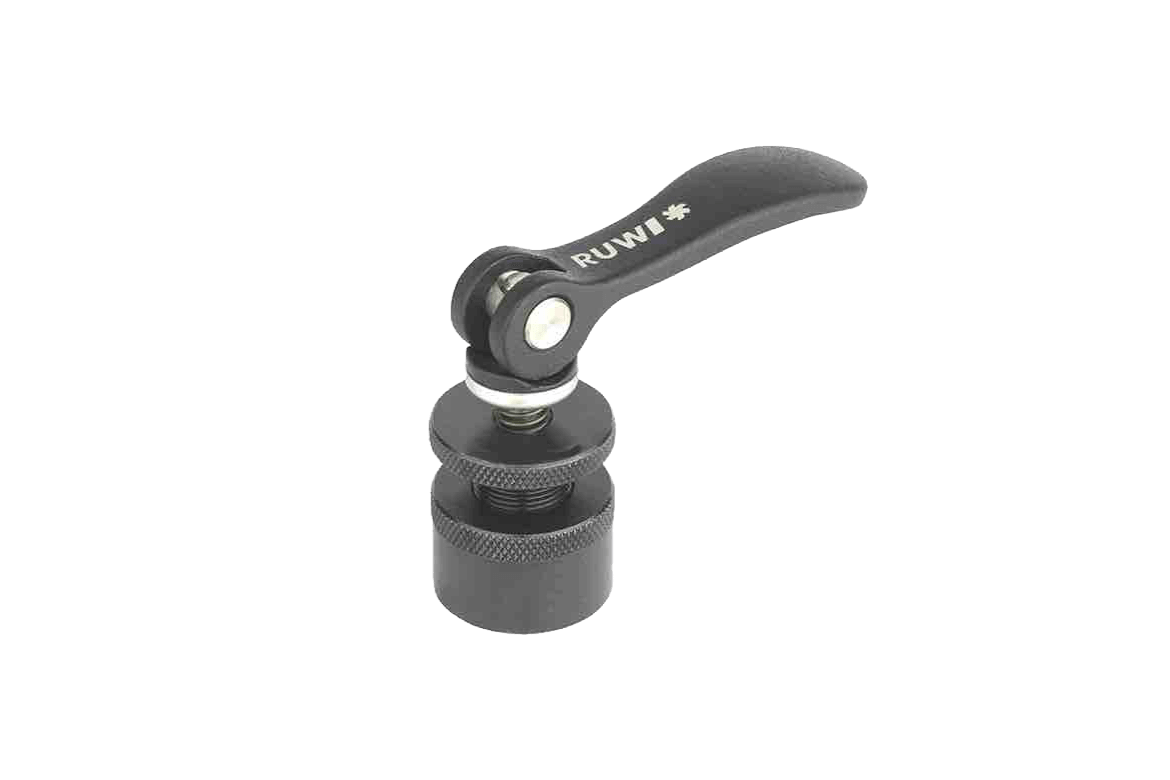
But there’s more to a part like this than meets the eye. A control piece helps define how a machine looks and feels—it’s the part your hand knows. And without it, nothing works: Even the most beautiful router table is only as good as the clamp that holds its fence in place. If we had to name a favorite part: the clamping lever on our toggle clamps. It fits comfortably in your hand, and it turns the clamping process into a single, simple step. We don’t manufacture these parts ourselves. They come from Sulz (Holzhausen)—ever since RUWI was founded.

The clamping lever on our toggle clamp—one simple step, and it's secure
The Sentence from Holzhausen
RUWI started small: its first workshop, its first machines, always with the KIPP catalog close at hand as a source of inspiration. The very first router table prototype already included KIPP parts. Back then, Reiner reached out to KIPP personally—partly because Heinrich Kipp, who ran the factory, was a role model for him. The supplier relationship led to visits, and the visits led to conversations.

KIPP video shoot for an application video at RUWI
And back in those early days, Heinrich Kipp said something that has stuck with us: “Someday,” he said, “Reiner will build a new company building, too.” At the time, RUWI was still operating out of its first workshop. Heinrich Kipp saw something that we ourselves couldn’t yet see. You don’t forget statements like that. They provide guidance—for years to come.
Anyone who says something like that must know what they’re talking about. Founded in 1919 as a mechanical workshop, KIPP first made a name for itself with a spätzle machine. In 1952, the first industrially manufactured adjustable clamping lever followed; today, it is available in around 27,500 variants, extending all the way to robots and automation systems. The workshop grew into a factory: over 530 employees at the headquarters, over 90,000 products, all manufactured in Germany. It’s run by a multigenerational team—Heinrich Kipp and his son Nicolas, together with Bernd Plocher. Anyone who asks Reiner about his visits to Sulz will hear two things: the impression of a company that is forward-looking and investing, even in logistics; and conversations with people whom, in the Black Forest, one simply calls “people of honor.”
HEINRICH KIPP WERK by the Numbers
| Founded | 1919, Sulz am Neckar |
| First adjustable clamping lever | 1952 |
| Employees at the headquarters | over 530 |
| Items in the catalog | over 90,000 |
| Managed | on the intergenerational team, third and fourth generations |
| KIPP parts in RUWI machines | since the first router table prototype |
| Distance between the plants | about 14 km as the crow flies |
Lived, not articulated
You can write sentences about values. You can also build them.
At KIPP, it looks like this: about 55 in-house apprentices; in 2019, the company ranked second among “Germany’s Best Training Companies” in the metal industry. You won’t find that in a mission statement—you see it happening every day right here on the premises.
And what about us? We’re smaller, but we’re heading in the same direction. We hold project days with the Heimbach School because knowledge is meant to be shared. And when the economy recently faltered and many businesses pulled back, we built: a new company building, constructed by local craftsmen using materials sourced right here. You could call that risky. We call it responsibility—thinking in terms of generations rather than quarters.

Our new building in Fluorn-Winzeln—built by local craftsmen
Heinrich Kipp’s words have thus come true. And the next generation has long since taken its place in the workshop: Reiner’s sons are expanding the business—they are, as we say, standing on their father’s shoulders. Father and son there, father and sons here. Perhaps that is why the two companies get along so well.
One parallel, however, surprised us during our research: According to the company, many of KIPP’s spaetzle machines are still in use today—and regarding our machines, the trade journal BM wrote that the used-machine market is largely RUWI-free because no one wants to part with their machine. Two companies whose products are simply impossible to get rid of. If that isn’t a value put into practice, I don’t know what is.
What Standard Parts Mean for Your Workshop
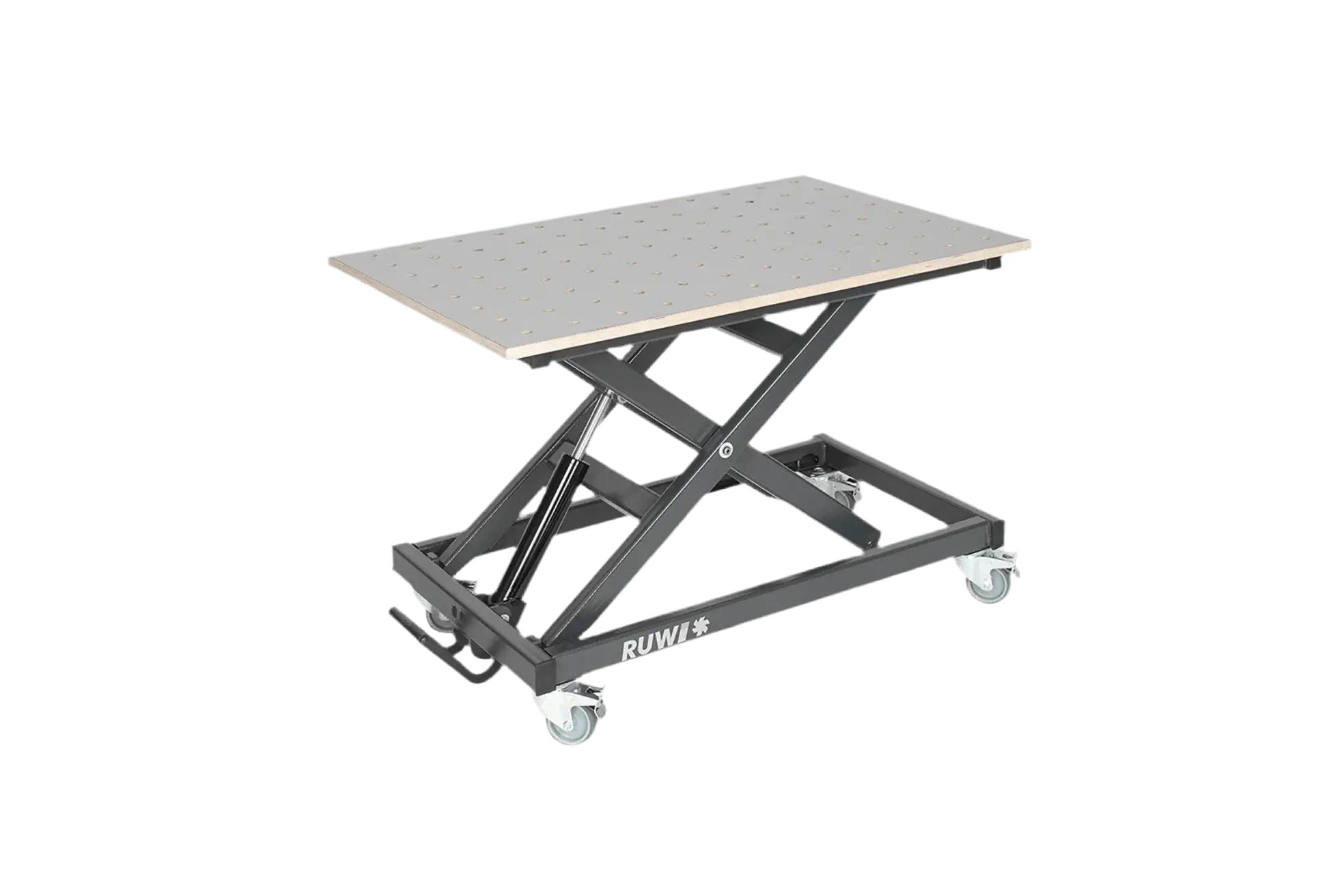
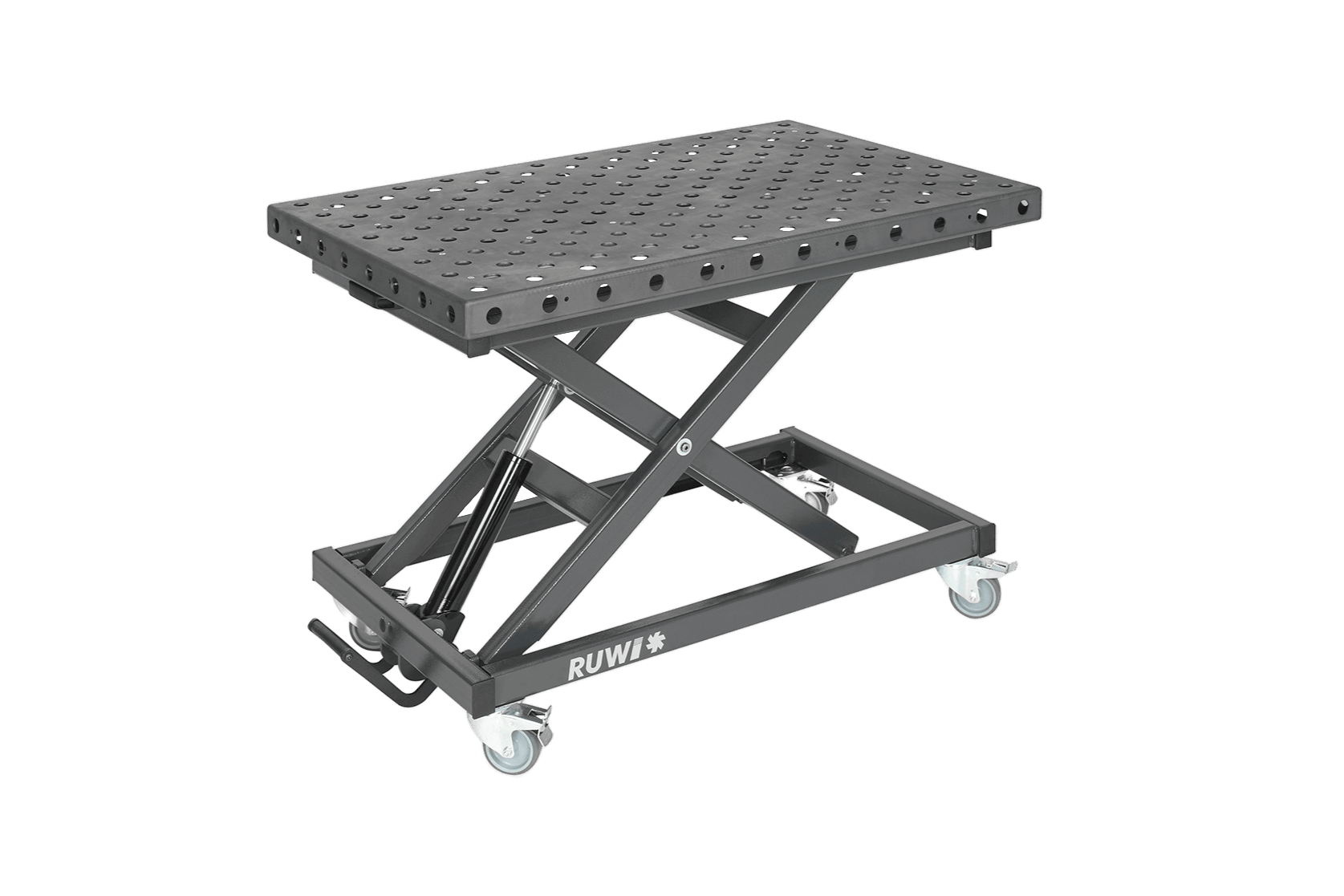
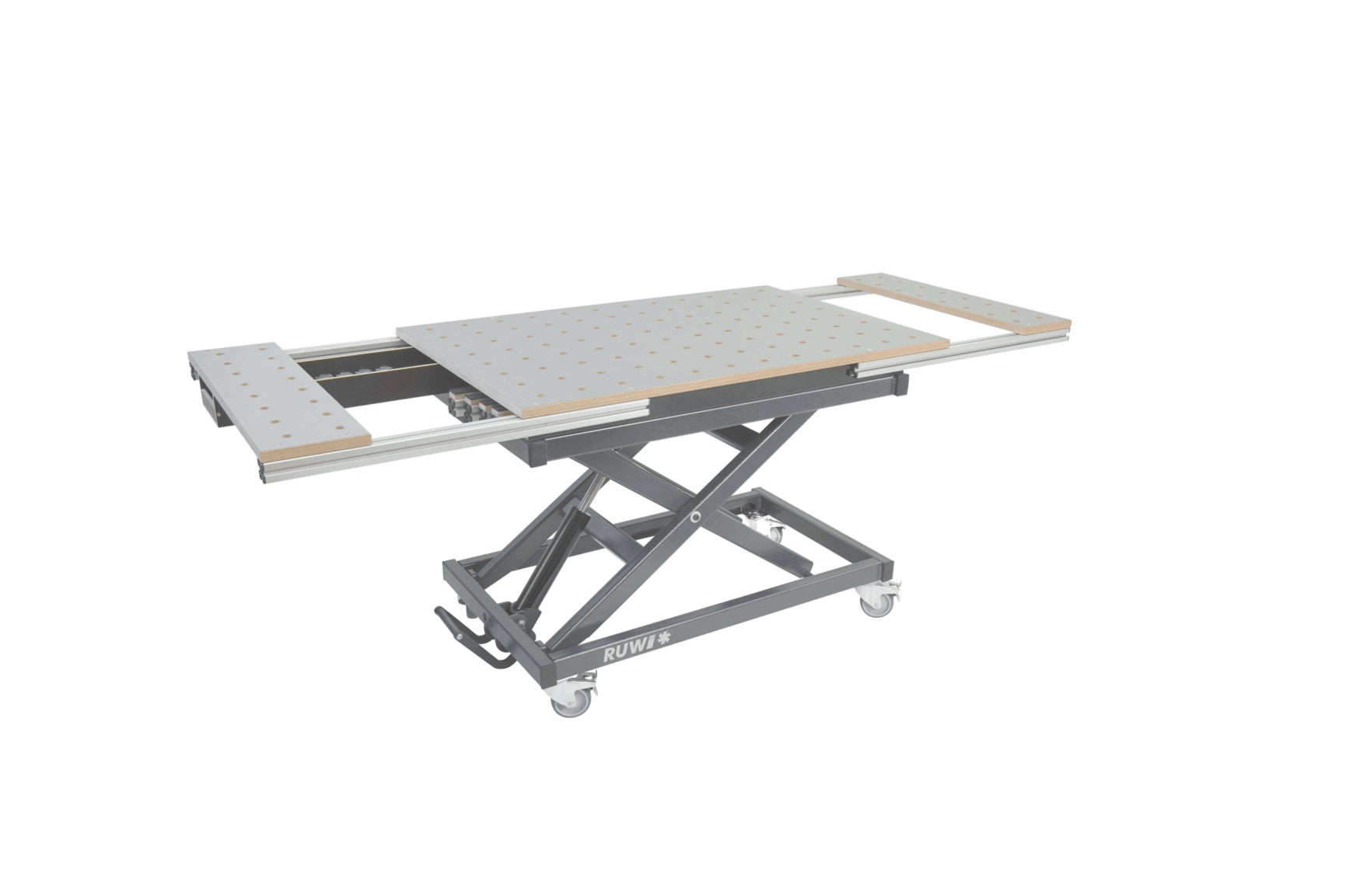
Why are we telling you all this? Because in the end, it means something tangible for your workshop: long-term availability. The KIPP parts on our router tables and lifting tables are standard parts—catalog items with part numbers and data sheets, manufactured in Germany. You can order a standard part just like any other replacement part—even ten years from now—by its part number from a technical supplier. An unbranded, off-the-shelf part, on the other hand, will disappear the next time its importer updates its product line. That’s why our machines are equipped with parts that come from a trusted source.

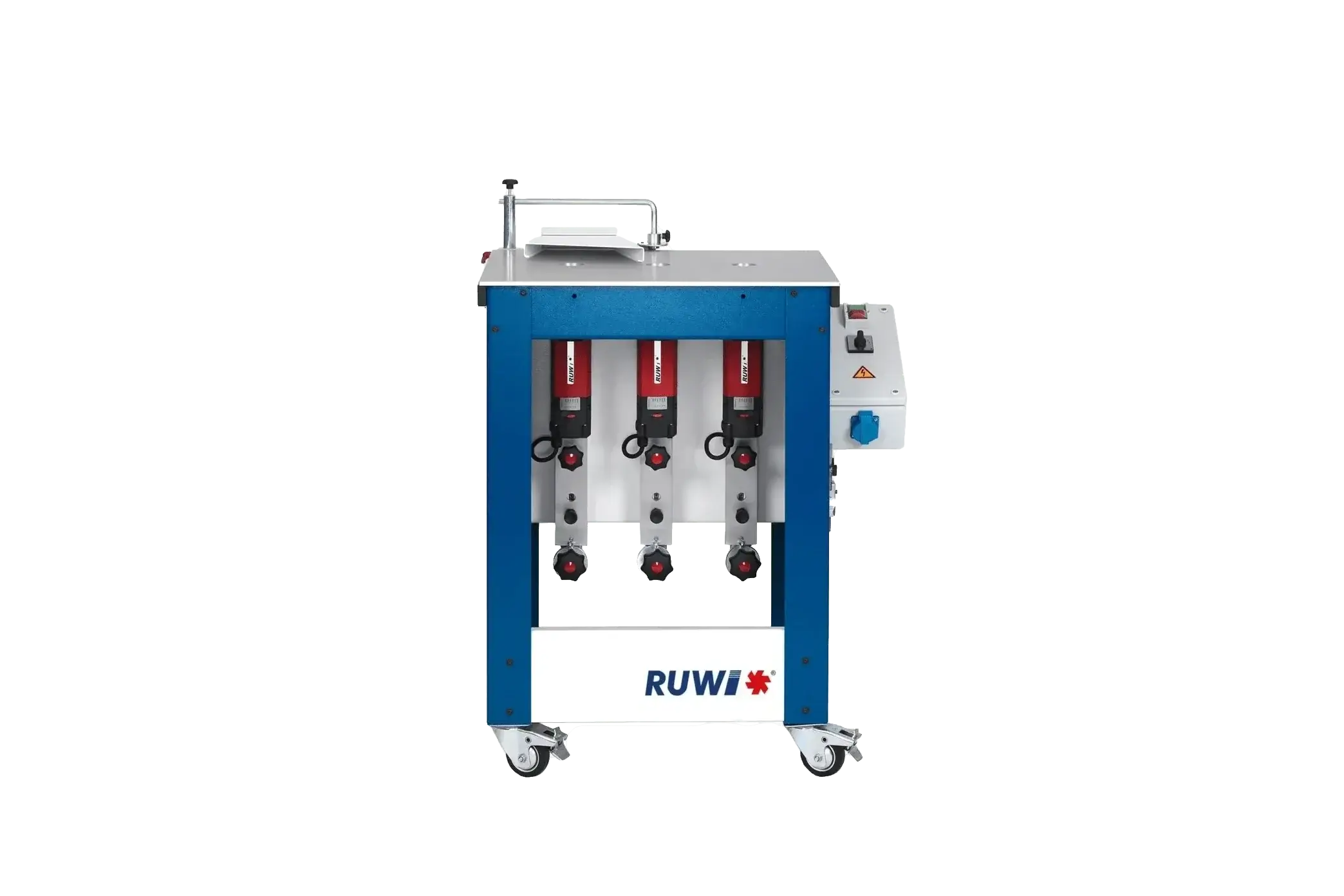
The RUWI router table – featuring parts from Sulz since the first prototype
By the way, the partnership has long been a two-way street: We also supply KIPP with our own products and clamping elements.
Thank you, neighbors
All that remains is to say thank you, and this is exactly where it belongs. Thank you for 26 years of operating parts that simply do their job. Thank you for the doors that were open to a young company. And thank you for a phrase spoken in that first workshop—one that has had a greater impact than any component.
A lot is changing right now, in our industry as everywhere else—some of the certainties of the past are gone. That makes what happens along a 14-kilometer stretch between the Black Forest and the Neckar all the more important: two family-run businesses that think not only of themselves, but of future generations. They continue to invest in people and the region—and remain hopeful in the process.


